I remember growing up listening to folklore. Those stories had everything: animals that behaved like humans, humans who behaved like animals, kings, tricksters, heroes, villains and, of course, that one character who somehow always managed to make a bad situation worse. Beneath the laughter and drama, however, there was usually a lesson tucked somewhere inside, something meant to make us wiser, better and perhaps less likely to repeat the mistakes we had just heard about.
For many of us, *Tales by Moonlight* was the television classroom, while *Ntị nara rie* served the same purpose on radio. We met Lion, who almost always carried the title of King; *Nnabe*, the Tortoise, whose intelligence often had a suspicious relationship with honesty; and *Anasi*, the Spider, whose cleverness could be both admirable and dangerous. But there is one character whose lesson has always stayed with me: Ebule-Ako, the little lamb.
The name itself tells part of the story. Ebule-Ako did not need to wait for life to give him a personal beating before learning its lessons. His wisdom was simple: if someone else has walked down a road and fallen into a ditch, why must you insist on entering the same ditch before accepting that it is there?
Experience, they say, is the best teacher. True. But experience does not necessarily have to be your own experience. Sometimes, the smartest thing anyone can do is learn from what happened to somebody else.
And that is where IICC Shooting Stars, now Shooting Stars Sports Club, enters this story.
Anyone familiar with Nigerian football history will remember the great IICC Shooting Stars of the 1970s. They were not merely a football club; they were a force. They became Nigeria’s first club to win a continental trophy and supplied players to the Green Eagles team that conquered Africa in 1980. They were giants, and for a long time, the kind of giants everyone assumed would remain giants forever.
But football has a funny way of reminding you that yesterday’s greatness does not automatically pay tomorrow’s bills.
Gradually, the steam began to disappear. Continental appearances became less frequent. A club that once occupied centre stage started making cameos. Eventually, their last appearance in the African Cup of Champions Clubs, now known as the CAF Champions League, came in 1999.
Then came the part nobody likes in a fairy tale. The slump became deeper, relegation arrived, and the club spent years away from the continental stage. Before long, 27 years had passed since Shooting Stars last played continental football.
Twenty-seven years is a very long time in football.
Somewhere along the way, there were probably warning signs that looked easy enough to dismiss. Maybe it was just a bad season. Maybe things would correct themselves. Maybe the next campaign would be better. Maybe the right appointment was around the corner. Maybe the right players would arrive. Maybe, maybe, maybe.
But football does not understand maybe.
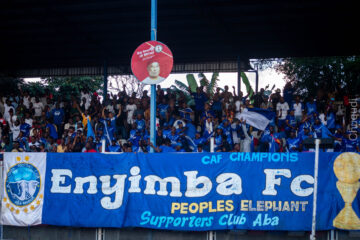
Now, after all those years, Shooting Stars are back on the continent. Whether they remain there or disappear again is not really the business of an Enyimba supporter. We have enough of our own problems to solve. Their story, however, is absolutely our business as a lesson.
Because the dangerous thing about a slump is not always the slump itself. It is the possibility of becoming comfortable with it.
We can tell ourselves that what Enyimba are experiencing is only a temporary dip, a little darkness before sunrise, one of those difficult periods every football club occasionally goes through before finding its feet again. Perhaps that is exactly what it is. But what happens next will not be determined by what we choose to call the slump. It will be determined by what we do about it.
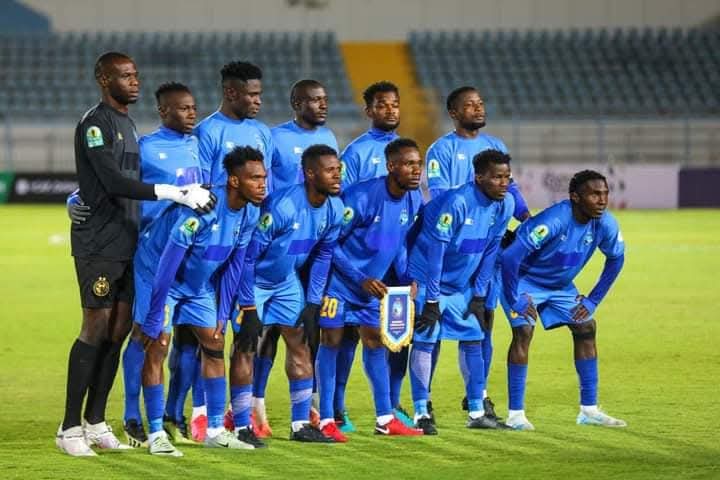
A few days ago, the chairman reportedly promised the current squad that their welfare would be given priority. That is encouraging because happy and properly motivated footballers usually perform better. A player who feels valued, protected and respected is more likely to give everything when the whistle blows.
But promises, like crosses and corners, only matter when they lead somewhere.
We hope this one leads to action.
Then there is recruitment. The transfer window around Enyimba remains largely wrapped in secrecy, and perhaps that is simply how the club has chosen to conduct its business. When the wrapping eventually comes off, however, we hope what is underneath reflects the intentionality required of a club genuinely determined to return to the top.
Football has moved.
The game being played today is not exactly the same one we watched five, ten or twenty years ago. Recruitment has become more sophisticated. Sports science matters. Data matters. Player welfare matters. Infrastructure matters. Scouting matters. Squad depth matters. Recovery matters. Communication matters. Even those little details once dismissed as unnecessary extras have become part of the difference between clubs that consistently compete and those permanently trying to catch up.
Nobody is asking Enyimba to become Real Madrid overnight. We are not demanding some European fantasy project in Aba. We are asking for the basics expected of a professional football club.
We want a football club to look and operate like one.
We want progress that can be measured, not occasional flashes that excite us today and leave us confused tomorrow. We want recruitment with a clear purpose, structures that survive changes in personnel and a team that improves because of deliberate planning rather than good fortune. Most importantly, we want football to remain at the centre of the conversation rather than personalities, politics, factions and unnecessary distractions surrounding it.
Three years have passed since a decorated former international and professional footballer took charge of this great club. There have been things worth applauding, certainly, but there are also many things supporters are still waiting to see.
Perhaps that is where Ebule-Ako becomes even more relevant.
We should not have to wait until our own story becomes somebody else’s cautionary tale before learning from the examples already in front of us.
Shooting Stars have just shown what can happen when a giant spends too long trying to find its way back. Their return to continental football should be celebrated by their supporters, but for us it should also serve as a warning. Greatness can disappear gradually. Standards can fall quietly. A bad season becomes two, expectations are adjusted downward, mediocrity becomes normal, and suddenly everyone is talking about the good old days as though they happened in another lifetime.
That is how decline becomes culture.
The objective does not have to be fixing everything in one season. Sustainable progress is usually much less dramatic than that. It is doing the right things consistently: recruiting better, developing players better, treating people better, improving facilities, strengthening the technical structure, competing harder and refusing to allow small problems to grow into permanent ones.
Rome, after all, was not built in a day. But Rome did not become Rome because everyone sat around admiring empty land and promising that one day something magnificent would appear there. Somebody had to keep building.
That is the lesson from Ebule-Ako.
We do not have to suffer the same fall before learning from somebody else’s. Enyimba have been too great, too important and too deeply woven into the history of Nigerian football for us to sit around until the warning signs become the story itself.
Let us learn early, act early and build again.
Ka Chineke mezie okwu
Enyimba Enyi