Good day.
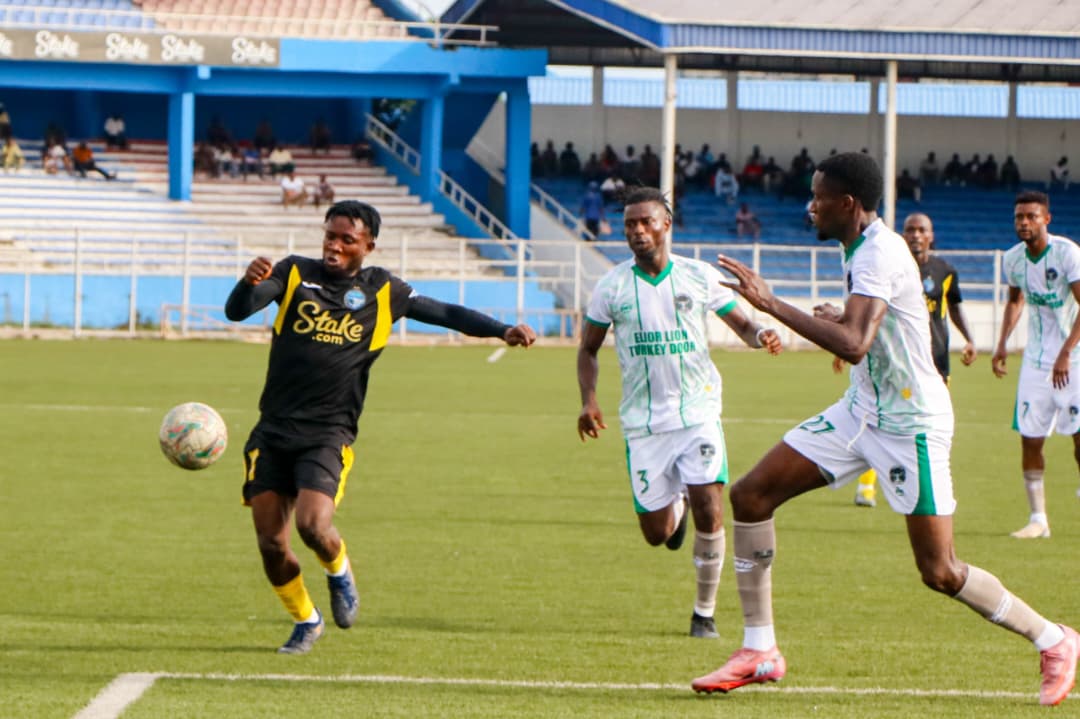
Last weekend, 35 states and the FCT concluded their FA Cup competitions, producing finalists for the President Federation Cup. For Enyimba, the emphatic 4-0 win over Ahudiyannem FC should count for something; confidence, momentum, and perhaps even a little spark for what lies ahead. In a season where survival has dominated the conversation, this result offers a rare chance to look beyond that immediate struggle. And yes, even if it sounds ambitious, why not at least imagine a route back to the continent?
But beyond the scorelines and the celebration, there is a deeper issue that refuses to stay hidden.
Watching the Abia State FA Cup finals on Sunday, it became harder to ignore what is increasingly obvious: the real problem with Nigerian football does not begin at the top. It begins at the foundation. The State FAs, which should be the engines of grassroots growth, are largely failing in that responsibility. And when the base is weak, no amount of polishing at the top can produce real or lasting progress.
The troubling part is not just inefficiency. It is the absence of intent.
Listening to the chairman’s speech, there was little to suggest a serious, structured vision for development. The focus appeared to be on increasing club registrations, but to what end? More teams entering competitions that offer no prize money, no exposure pathways, and no meaningful development programme. That raises a simple but important question: what exactly are these clubs signing up for? Participation without progression is not development. It is stagnation dressed up as activity.
Take a step back and look at the wider ecosystem. What grassroots competitions are being consistently organized? What technical support is available to emerging clubs? Where are the youth development frameworks, the coaching clinics, the scouting structures? In many states, including Abia, these questions do not have convincing answers. Meanwhile, a few more forward-thinking states are making visible efforts to attract sponsors, structure their competitions better, and create real value around the game. That contrast makes one thing clear: this is not just a resource problem. It is a problem of leadership, imagination, and will.
And it does not end there.
The same people who dominate State FA structures often shape decision-making at the national level. That creates a cycle where the same weaknesses at the grassroots are simply reproduced higher up. When those closest to the football itself; club owners, coaches, technical experts, and genuine investors are pushed to the margins, while administrators with little direct stake in the game retain control, progress becomes something we stumble into by accident rather than build deliberately.
That is why real reform cannot be cosmetic.
If Nigerian football is serious about moving forward, then the shift must begin with empowering the true stakeholders; the club owners, investors, and technical minds; to play a stronger role in shaping policy and direction. Not as ceremonial figures. Not as afterthoughts. But as actual decision-makers. Because until those who truly understand the game are allowed to influence how it is run, we will keep recycling the same failures under different names.
Right now, what we have is a system that sustains itself rather than one that develops the game. And until that changes, growth will remain something we talk about, not something we genuinely see.
Enyimba Enyi