
Give the Fans a Reason to Return


Good day!
It is the final weekend before the league finally kicks off. The waiting is almost over, and very soon we will either be trooping into the Elephant Park to watch our boys in the flesh or staying glued to our phones from wherever we find ourselves. X, Facebook, WhatsApp, score apps, websites—anything capable of telling us what is happening in real time will suddenly become important again.
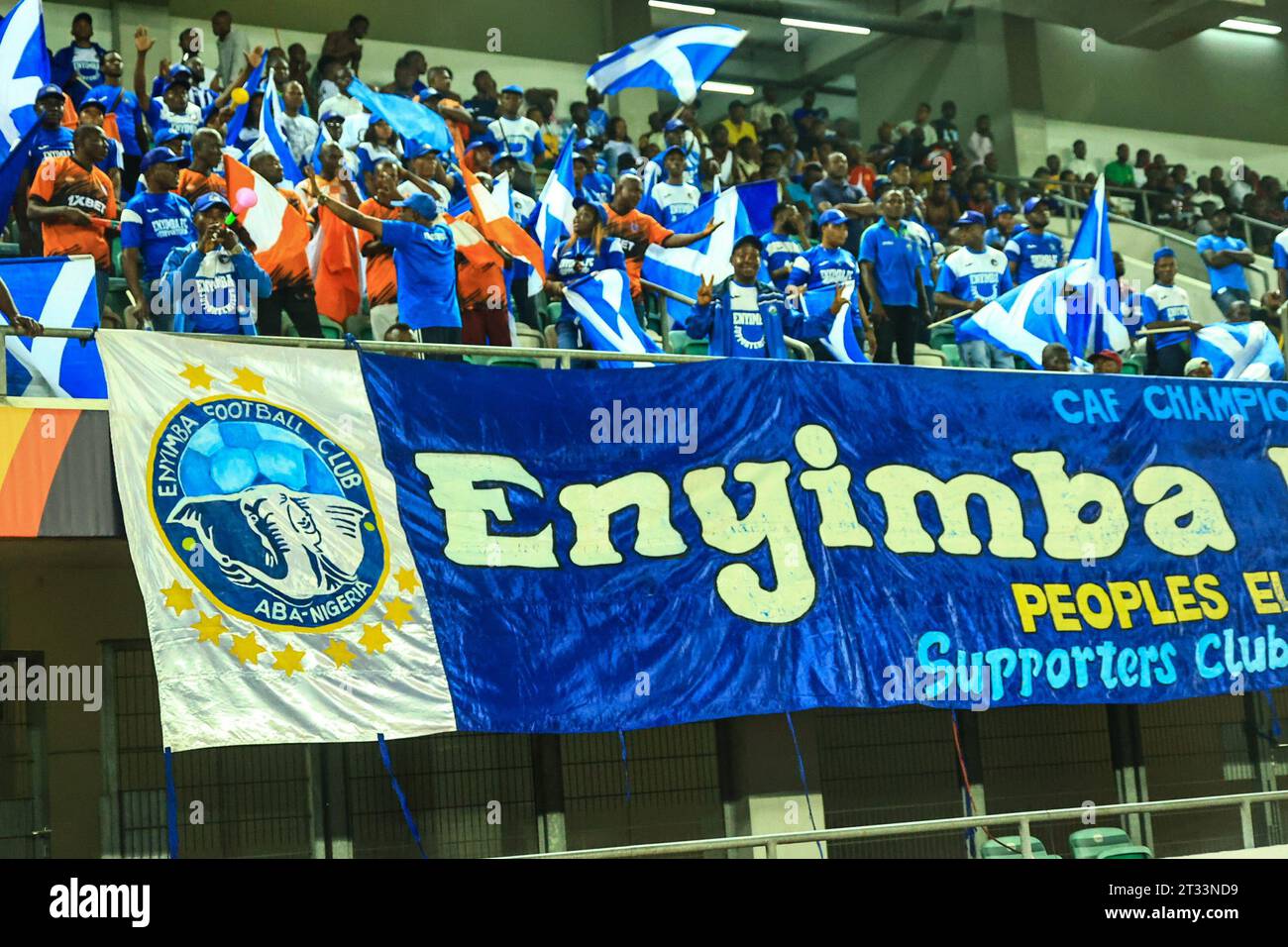
That tells us something about football. The players and referees may be the main actors we see on the pitch, but supporters are the heartbeat of the occasion. The chants, drums, songs, banter and sheer energy coming from the stands are what transform ninety minutes of football into an experience. Try watching a match without the stadium ambience and you quickly realise how painfully dull the game can become.
Little wonder one of our former gaffers, Yemi Olarenwaju, once singled out that sold-out Oriental Derby in Enugu as one of his most memorable matches. I doubt the memory was entirely about the result, especially considering how the chaotic ending eventually pushed the final outcome into the boardroom. It was probably the atmosphere, the noise and the feeling of being involved in a football match thousands of people had specifically come to witness.
Give footballers a packed 15,000-capacity stadium every other weekend and you will almost certainly squeeze something extra from them. Players feed off that energy, opponents feel the pressure and even ordinary moments suddenly seem important. Football is simply better when people care enough to fill the stands.
Unfortunately, I sometimes wonder whether we properly understand the value of supporters in our league. Beyond government allocations, sponsorships and the usual funding arrangements, the fan base remains one of the most important assets any football club possesses. Like every other asset, the way you treat it determines whether its value grows or gradually disappears.
There are many ways to retain supporters and attract new ones, but the first remains painfully obvious: results. Results eliminate plenty of complaints.
During Enyimba’s heyday, the stands were filled to the rafters not because Aba had suddenly run out of alternative entertainment. People came because there was pride in watching Enyimba. Every other weekend provided something to anticipate. We wanted to see which unfortunate opponent would arrive in Aba and become the next victim. Even when the result occasionally went against us, there was often enough in the performance to make you feel that the time, money and emotion invested had been worthwhile.
That certainty has gradually disappeared. You do not always know what version of Enyimba you are going to see. Results have become inconsistent, performances have dipped and some supporters have understandably begun to drift away. That does not necessarily mean they stopped loving the club. Football is an emotional investment, and when the returns diminish continuously, people eventually begin withdrawing a little of themselves.
But results were never the only thing that connected Enyimba to its supporters. There was also the community.
There was a time when Enyimba was not simply a football club located in Aba; it felt woven into the fabric of the city. As primary school pupils, merely hearing that an Enyimba player lived somewhere along the route we took to school was enough for us to claim him as our guy. There were radio jingles that built anticipation for continental nights, and some of those jingles are probably still stored somewhere in the heads of supporters who heard them twenty years ago.
The players were not merely names on a team sheet. They were stars. People recognised them, talked about them and wanted to be like them. The club occupied space in everyday conversations because Enyimba made itself part of everyday life.
Communication played a huge role.
It is easy to forget how difficult getting information out was in those days compared with today. There was no X, Facebook, Instagram or WhatsApp waiting to distribute a match update to thousands of people within seconds. Yet the late Tonex Chukwu understood that the story of Enyimba needed to be told.
A media room was equipped with a fax machine so match reports could be transmitted quickly to media houses. Journalists received information, newspapers carried the stories and people talked about Enyimba. The players became household names because there was a deliberate effort to ensure that what happened around the club did not remain trapped inside the stadium.
And most importantly, it was never supposed to be about one individual. The story was Enyimba.
Today, building that relationship should be significantly easier. Technology has removed almost every barrier that existed then. A club can speak directly to tens of thousands of supporters using nothing more complicated than a smartphone. It can tell stories around players, build anticipation ahead of matches, show moments from training, celebrate supporters and make someone living in Lagos, Abuja, London or Johannesburg still feel connected to what is happening in Aba.
That is why it becomes difficult to understand when supporters are treated almost like an afterthought.
Perhaps it is one of the consequences of the state-owned football model. Government funding is expected regardless of how many people enter the stadium. There may always be a promising player to sell or another intervention somewhere down the line. The club can technically continue functioning whether the stands are full or empty.
But merely surviving is not the same thing as building a football club.
A supporter is much more than somebody who buys a ticket and occupies a seat for ninety minutes. That person can become a customer, marketer, storyteller, broadcaster, ambassador and lifelong stakeholder. The stronger the emotional relationship between the supporter and the club becomes, the more valuable that supporter becomes to Enyimba.
So as we prepare for another season, it is worth asking whether there is also a plan for the people in the stands. What will make someone leave his house every other weekend and head towards the Elephant Park? What will give supporters reasons to talk about Enyimba from Monday until the next matchday? Are we telling enough stories about the players for people to develop emotional connections with them? Are we celebrating supporters who remained when results gave them every reason to stay away?
These things matter because fan bases do not remain strong simply because they existed before.
Relationships require attention.
If Enyimba deliberately reconnects with its supporters, improves the matchday experience, communicates properly and, most importantly, begins producing a team people genuinely enjoy watching again, the atmosphere will gradually return. And once the Elephant Park becomes full and noisy again, that crowd itself can become part of the competitive advantage.
The season is about to begin. The players will have targets, the coaches will have tactical plans and management will have objectives it hopes to achieve. The supporters should be somewhere inside those plans too.
We need the fans, and the fans need to feel needed.
It is time to bring back the anticipation that starts days before kickoff, the colours around Aba, the songs from the terraces and the noise that makes visiting teams know immediately that they have entered the home of the People’s Elephant.
It is time to fill the stands again.
Written by Chinatu Jon
Passionate writer and analyst for That Enyimba Fan publication.


💬Fan Discussion (0)
No comments yet on this article. Be the first to share your reaction!
Leave A Comment
Your email address will not be published. Required fields are marked *